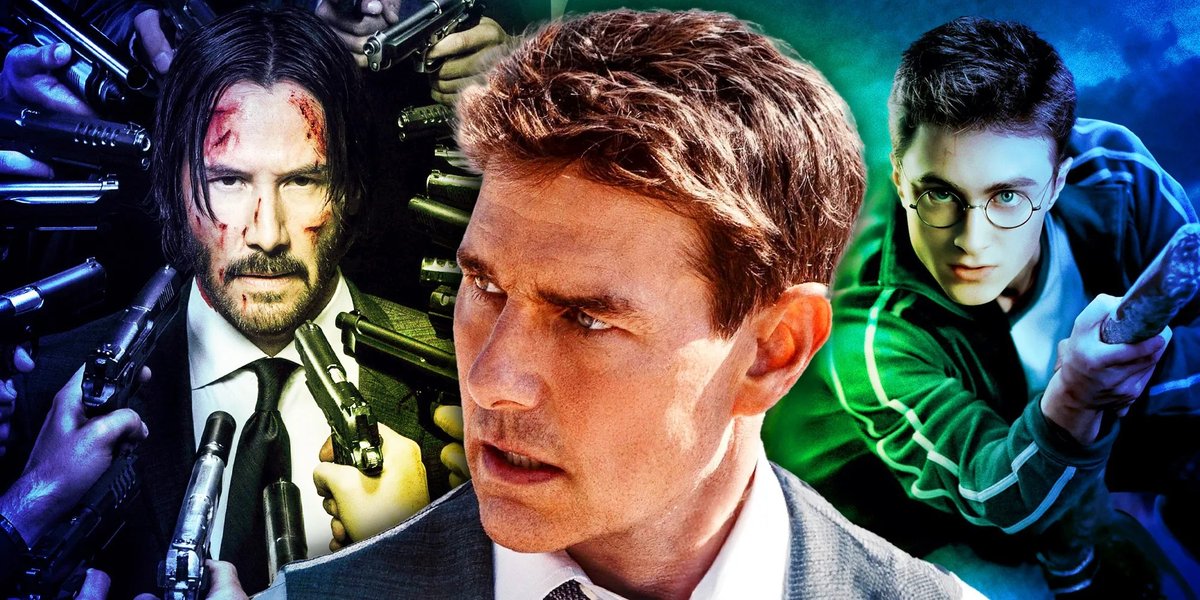
When you think about the stories that have truly shaped culture, sparked countless conversations, and kept you coming back to the cinema or your couch, chances are you’re thinking about Iconic Film Franchises & Sagas. These aren't just one-off blockbusters; they're expansive narrative universes that captivate audiences by exploring larger-than-life tales or deeply interconnected stories, becoming a mainstream sensation that defines pop culture in our 21st century and beyond. They offer more than just a single viewing experience—they promise ongoing adventures, character evolutions, and worlds to get lost in.
At a Glance: What Makes a Film Franchise Iconic?
- Expansive Storytelling: Franchises explore deep narratives, often across multiple films, developing characters and worlds over time.
- Cultural Impact: They influence pop culture, create shared experiences, and become touchstones for generations.
- Enduring Appeal: Iconic franchises often blend action, drama, comedy, or sci-fi in ways that resonate for decades.
- Innovative Filmmaking: Many push boundaries with special effects, storytelling techniques, or compelling performances.
- More Than Four Films (Often): While some legendary trilogies exist, the most enduring franchises typically offer four or more entries, allowing for significant narrative growth and reinvention.
The Enduring Allure of Multi-Film Marvels
What is it about a multi-film saga that grips us so powerfully? It’s more than just a successful movie; it’s an invitation to a prolonged relationship with characters, worlds, and ideas. We invest in their journeys, anticipate their next moves, and debate their destinies. From the street-level grit of early entries to universe-expanding spectacles, these series don't just tell stories—they build legacies.
This phenomenon isn't new, but the 21st century has supercharged it, turning cinematic universes into global events that dominate box offices and streaming queues alike. Whether it's the thrill of seeing beloved characters evolve or the excitement of discovering new corners of a familiar universe, film franchises offer a unique kind of escapism and communal experience.
The Titans Among Us: Franchises That Stand Above the Rest
Let's dive into the sagas that have etched themselves into our collective consciousness, examining what makes each one a cut above.
Epic Sagas & World-Builders
These are the franchises that don't just tell a story; they create entire universes that feel lived-in and real, often drawing from rich source material.
- Star Wars: A seemingly endless "galaxy far, far away" that has transcended film to become a cultural touchstone. Spanning three film trilogies (the Skywalker Saga), standalone movies like Rogue One, and a constant stream of new content, it continues to explore new characters and offer content almost every year. Its blend of myth, sci-fi, and memorable characters ensures its place in history.
- The Lord of the Rings: Peter Jackson's trilogy set the bar for epic fantasy adventure films for over two decades. Each movie meticulously brought J.R.R. Tolkien's world to life, improving on the last. Characters like Frodo, Samwise, and Aragorn embark on compelling arcs, complemented by groundbreaking CGI and iconic battle sequences that remain unparalleled.
- Harry Potter: The eight-film franchise is beloved for its magical visuals, strong performances from Daniel Radcliffe, Emma Watson, and Rupert Grint over a decade, and Alfonso Cuarón's pivotal direction of the best installment, Prisoner of Azkaban. While the Fantastic Beasts prequels are often recommended to be skipped by purists, the original saga’s magic endures for generations.
- The Hunger Games: A defining cinematic trend of the 2010s, this dystopian fantasy, based on Suzanne Collins' books, plunged viewers into a future where children compete in a fight-to-the-death tournament. Katniss Everdeen's (Jennifer Lawrence) initial four-film story is absorbing, combining strong characters, a piercing story of oppression, and immersive world-building. The prequel, The Hunger Games: The Ballad of Songbirds & Snakes (2023), offered an enticing look at the origins of the games.
- Avatar: James Cameron's highly visual franchise has released two films, with at least three more planned, continuing the story of Jake Sully, Neytiri, and their family on Pandora. While some viewers don't universally adore the plot or characters, the mesmerizing visuals, especially in Avatar: The Way of Water, are a key draw, pushing the boundaries of cinematic immersion.
Action & Adrenaline Junkies
From impossible stunts to gritty revenge, these franchises deliver pulse-pounding thrills and iconic heroes.
- Fast & Furious: Starting in 2001, this 11-film franchise evolved from street racing and crime into an over-the-top blockbuster spectacle. Known for "big, dumb, loud fun," it regularly defies physics with audacious action, A-listers, and immense set pieces. The series continues to thrive, with Fast X adding major stars like Rita Moreno, Brie Larson, and Jason Momoa to its ensemble.
- John Wick: Arguably the biggest action cinema title of the 21st century, this franchise captivates with evocative narrative, beautifully constructed action sequences, and alluring style. What began as a revenge tale evolved into a globe-trotting, star-studded action extravaganza, with each movie surpassing the last in scope and sophistication, driven by Keanu Reeves' iconic performance.
- Mission: Impossible: Ethan Hunt (Tom Cruise) performs death-defying stunts in these consistently solid spy capers. Featuring moments of brilliance like the vault scene in MI1 and Henry Cavill's memorable turn in Fallout, the series continues to innovate with incredible practical effects, such as a recent motorcycle jump off a mountain in Dead Reckoning Part One.
- James Bond: Over 50 years old, this spy franchise has become increasingly less campy (e.g., the gritty Daniel Craig era) but maintains core elements like a preference for martinis, gadgets, and globe-trotting intrigue. It is expected to continue for another 50 years, constantly reinventing its leading man and the face of international espionage.
- Indiana Jones: A timeless adventure series, this franchise is listed among the best for its thrilling set pieces, compelling archeologist hero, and seamless blend of action, history, and the supernatural across its five films.
- Lethal Weapon: A hallmark of '80s fun, this odd-couple buddy cop action series coasts on the undeniable chemistry of Mel Gibson as Martin Riggs and Danny Glover as Roger Murtagh. The first two films, in particular, are bombastic, excelling as smart, snappy, crowd-pleasing thrills that blend character development, comedy, and camaraderie.
- The Terminator: Masterminded by James Cameron, this franchise is defined by its exhilarating highs (The Terminator (1984) as a gritty thriller, Terminator 2: Judgment Day as a stunning blockbuster masterpiece) and lackluster later films. It delivered action icons Arnold Schwarzenegger as the titular robot and Linda Hamilton as Sarah Connor, and remains a treasured gem of sci-fi and action cinema, despite diminishing returns from sequels bogged down by their own lore.
- Alien: Since the '70s, this franchise has masterfully melded action, sci-fi, and horror, becoming gorier over the decades. Alien (1979) and Aliens (1986) are considered the gold standard, with the upcoming Alien: Romulus set between them. Despite inconsistent quality in later entries, all films offer redeeming qualities for horror and sci-fi fans, solidifying its place as a groundbreaking series.
Horror That Haunts
These franchises tap into our deepest fears, creating indelible villains and enduring nightmares.
- Halloween: A pioneering slasher horror franchise known for John Carpenter's direction, which created profound suspense and shocking brutality, introducing the iconic masked killer Michael Myers. Its 13-film run includes gems like Halloween H20: 20 Years Later (1998) and the standalone Halloween III: Season of the Witch, with recent legacy sequels renewing interest. It is enduring, influential, and occupies an air of horror movie royalty.
Animation Legends
Bringing beloved characters to life with humor, heart, and visual innovation, these animated sagas prove that cartoons are for everyone.
- Shrek: A defining animated movie series of this century, it's known for its subversion, punky attitude, comedy, and skewering of fairy tale norms, following the titular ogre and his fairy-tale friends. Shrek (2001) is an icon, and Shrek 2 (2004) brilliantly built upon its predecessor; Shrek 5 is already set for 2027, promising more irreverent fun.
- Toy Story: This beloved Pixar series has delivered seemingly conclusive and deeply emotional endings with Toy Story 3 and Toy Story 4. Yet, the story continues to resonate, with Toy Story 5 now in development, extending the popular series that explores themes of friendship, purpose, and growing up through the eyes of toys.
- Sony's Spider-Verse: This animated multi-verse franchise brings comic books to life with breathtaking visual flair and a stellar voice cast (Shameik Moore, Hailee Steinfeld, Jake Johnson, Oscar Isaac). Miles Morales's story concluded on a cliffhanger in Across the Spider-Verse, leaving audiences eagerly anticipating a third installment that continues to redefine animated storytelling.
Superhero Spectacles
From gritty realism to vibrant comic book pages brought to life, these franchises showcase the enduring appeal of caped crusaders and their complex worlds.
- Christopher Nolan's Batman Trilogy: Consisting of Batman Begins, The Dark Knight (a monumental highlight), and The Dark Knight Rises, this is considered a top-tier comic book movie trilogy. Heath Ledger's Joker is universally praised, while Christian Bale's nuanced portrayal of Bruce Wayne/Batman often gets overlooked in its brilliance.
- Sam Raimi's Spider-Man Trilogy: This series features Tobey Maguire as a truly endearing Spidey and delivered some of the greatest comic book movie villains, including Green Goblin, Doc Ock, and Venom. While Spider-Man 3 is often seen as the weakest, it's far from bad, and iconic scenes like the train sequence in Spider-Man 2 remain cinematic highlights.
- Iron Man: While an integral part of the larger Marvel Cinematic Universe (MCU), the three films centering on Tony Stark form a spectacular standalone trilogy with a complete and deeply satisfying character arc. Tony Stark, embodied by Robert Downey Jr., was the magnetic main character in all his appearances, launching an entire universe.
- Black Panther: These two films, nestled within the larger MCU, notably stand alone, telling complete stories of heroism, grief, and family legacy in the vibrant nation of Wakanda. They are the only MCU movies to win major awards. The second movie served as a poignant tribute to Chadwick Boseman, gracefully passing the heroic mantle to Shuri (Letitia Wright).
- X-Men: The live-action X-Men movies are notorious for their complex timeline and inconsistent quality, yet they contain brilliant moments and an excellent, well-cast ensemble (including Hugh Jackman as the definitive Wolverine). X-Men: Days of Future Past is a particular highlight, and the original X-Men (2000) may even be credited with kickstarting the modern superhero cinema craze.
- The Avengers: The MCU's Infinity Saga culminated successfully with Avengers: Endgame, a global phenomenon. To fully appreciate its epic scope, one needs to see previous Avengers films, Captain America: Civil War (often considered Avengers 2.5 for its significance), and Thor: Ragnarok, illustrating how interconnected sagas demand viewer investment. You can explore superstar films that have defined the modern blockbuster landscape, often originating from these very franchises.
Beyond the Expected: Unique & Beloved Sagas
Not all iconic franchises fit neatly into traditional genre boxes. These stand out for their unique premises, enduring charm, or unforgettable spectacles.
- Rocky: The Oscar-winning 1976 Rocky masterpiece launched a franchise focusing on Rocky Balboa's (Sylvester Stallone) career, embodying the underdog spirit. Despite varied installment quality, the Creed spin-off, where Rocky mentors Adonis Creed (Michael B. Jordan), significantly boosted the series' legacy. Overall, it's a triumphant, iconic testament to sporting drama and perseverance.
- Back to the Future: This beloved franchise stands the test of time with remarkably solid time travel rules and a captivating mix of family drama, romantic tension, action, humor, and iconic elements like the Wild West and the DeLorean time machine. It's a masterclass in blockbuster filmmaking that continues to charm new generations.
- Bridget Jones: A delightful rom-com franchise where Bridget Jones's Diary and Bridget Jones's Baby are excellent, and Bridget Jones: The Edge of Reason offers plenty of laughs. The endearing love story of Bridget and Mark Darcy is central to its charm, with a fourth movie planned featuring Renée Zellweger, though sadly without Colin Firth.
- Bring It On: While the first Bring It On movie is undoubtedly the best, its seven entries share a spirit of shameless silliness, impressive athleticism, and broad parodies of high school and college life, making it a cult classic for cheerleading and teen comedy fans.
- Step Up: While plot and characters beyond the first movie are often forgotten, the franchise is memorable for its endlessly rewatchable, highly choreographed dance numbers, such as the electrifying rain dance in Step Up 2: The Streets or the creative shipping container dance in Step Up Revolution. It's pure visual spectacle for dance enthusiasts.
- High School Musical: High School Musical and its sequel were massive Disney Channel successes, leading to High School Musical 3: Senior Year being released in theaters to significant box office returns. The movies hold up surprisingly well with their catchy, popular songs like "Breaking Free," defining a generation's musical tastes.
- Baz Luhrmann's Red Curtain Trilogy: This isn't a traditional narrative franchise; instead, these first three films (Strictly Ballroom, Romeo + Juliet, Moulin Rouge!) share a distinctive filmmaking style and consistent theater motif rather than continuing plot or characters. It's an iconic collection for its unique artistic vision.
Crafting a Legacy: What Makes a Franchise Truly Iconic?
Becoming an "iconic" franchise isn't just about making money; it's about making a lasting mark. Several ingredients contribute to this alchemy:
Consistent Vision (or Brilliant Reinvention)
Some franchises, like Lord of the Rings, maintain a singular creative vision throughout their run, resulting in a cohesive epic. Others, like James Bond or Batman, thrive on brilliant reinvention, adapting to changing times and audiences while retaining their core essence. The ability to either stick to a winning formula or daringly transform it is crucial.
Memorable Characters & Performances
Think of Harrison Ford as Indiana Jones, Keanu Reeves as John Wick, or Sylvester Stallone as Rocky Balboa. These actors don't just play roles; they embody them, creating characters that resonate deeply and become synonymous with the franchise. Their performances often anchor the entire saga, making us care deeply about the fates of these fictional beings.
Innovation (Storytelling or Technical)
Truly iconic franchises often push boundaries. Jurassic Park revolutionized filmmaking techniques with its photorealistic dinosaurs, while The Matrix broke ground with its innovative story about simulated reality and bullet-time effects. These technical and narrative advancements not only define their own series but often influence the entire industry.
Cultural Resonance
An iconic franchise taps into something universal. The Matrix (1999) had immense social impact, provoking philosophical discussions about reality and free will. The Hunger Games struck a chord with its piercing commentary on oppression and resistance. When a franchise becomes part of the wider cultural conversation, it transcends mere entertainment.
Fan Engagement & Longevity
The ability to build a dedicated fanbase that continues to engage with the material, buy merchandise, debate lore, and anticipate new entries is a hallmark of an iconic franchise. Longevity, often through prequels, sequels, and spin-offs, allows these stories to grow and adapt, sometimes for decades, like Star Wars or Halloween.
Navigating the Nuances: The Good, The Bad, and The Rebooted
Not every installment in an iconic franchise hits the mark. The journey of these sagas is often a rollercoaster, reflecting the challenges of sustaining creative momentum over many years.
Pitfalls to Avoid: Diminishing Returns and Lore Bloat
Some franchises, like The Terminator, suffer from diminishing returns, with later films struggling to recapture the magic of earlier masterpieces and often getting bogged down by convoluted lore. The challenge is to expand the universe without diluting its core appeal or confusing its audience. Unnecessary sequels, driven by commercial rather than creative reasons, can tarnish a franchise's legacy.
The Power of Reinvention: Reboots, Prequels, and Spin-offs
When a series falters, reinvention can be its salvation.
- Reboots offer a chance to reset, like Christopher Nolan's Batman Begins, breathing new life into a beloved character.
- Prequels, such as The Hunger Games: The Ballad of Songbirds & Snakes, can enrich existing lore by exploring origins and backstory.
- Spin-offs, like the Creed films within the Rocky universe, allow new characters to emerge and carry the torch, ensuring the spirit of the franchise continues in fresh ways.
- Even films with multimedia success, like The Matrix which included The Animatrix and early video game adaptations, can solidify their status through narrative boldness and pioneering technical feats, despite less successful immediate sequels.
The best franchises learn from their missteps, adapting and evolving to stay relevant and captivating for new generations of viewers.
Your Next Deep Dive: Discovering More Cinematic Worlds
The world of iconic film franchises and sagas is vast and continually expanding. Whether you're drawn to the high-stakes action of a spy thriller, the immersive magic of a fantasy epic, or the chilling suspense of a horror series, there's always a new (or old) cinematic universe waiting to be explored.
Consider revisiting a classic that shaped your childhood, or perhaps dive into a newer saga that’s currently captivating audiences. These franchises offer more than just entertainment; they provide a shared cultural language, a sense of belonging, and endless opportunities for discussion and discovery. So grab your popcorn, pick a saga, and prepare to lose yourself in the captivating power of storytelling that truly stands the test of time.